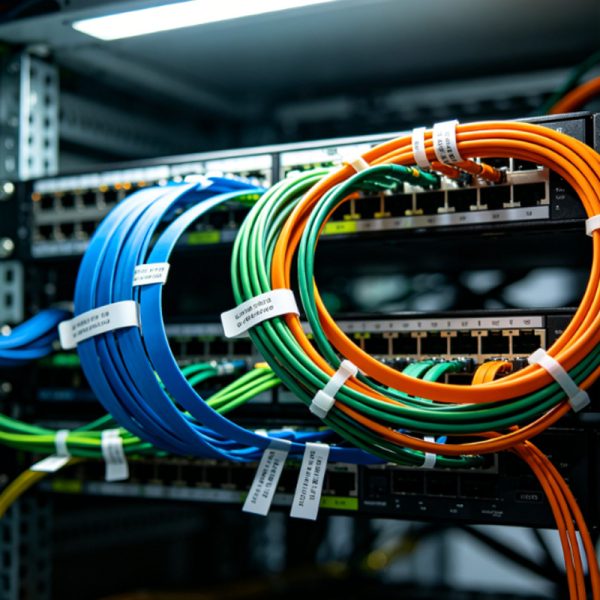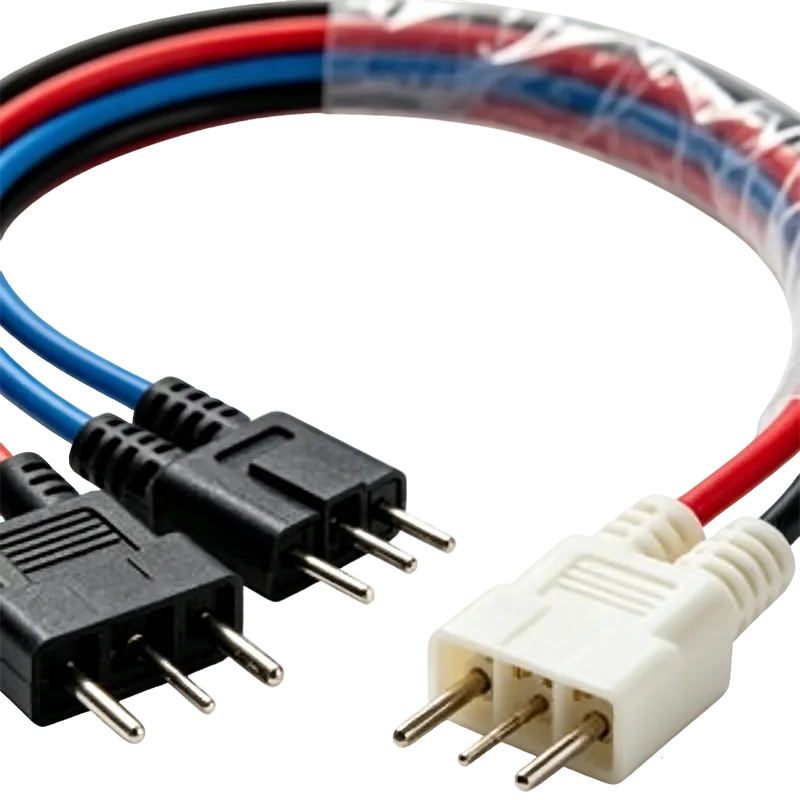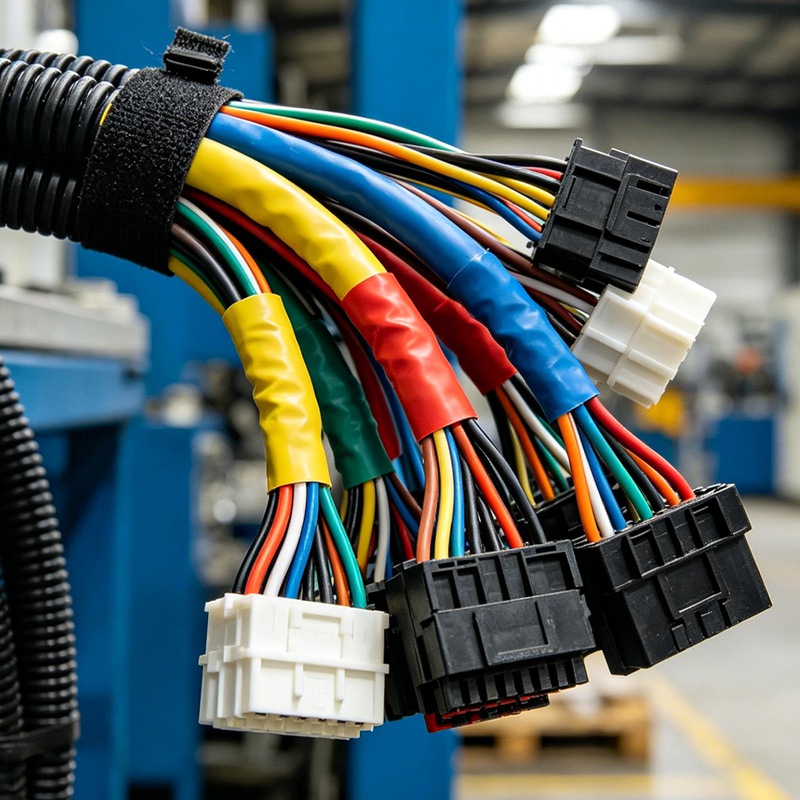


Modern vehicles depend on stable and precise electrical connectivity. An automotive wiring harness is more than a collection of wires — it is the central electrical distribution system that supports power transmission, signal communication, sensors, lighting, infotainment, safety systems, and advanced driver assistance technologies.
TUOGEE provides custom automotive wiring harness manufacturing for automotive electronics, EV systems, industrial vehicles, and intelligent mobility applications. Our engineering and production processes focus on reliability, electrical stability, traceability, and long-term durability under demanding operating conditions.
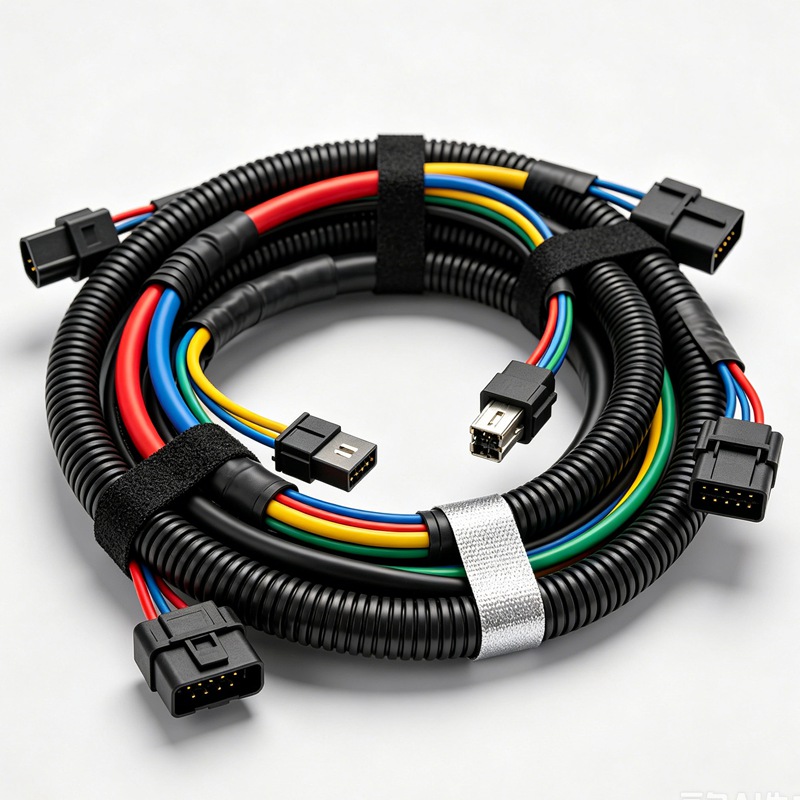
TUOGEE supports low-volume prototypes through high-volume production for different automotive and industrial applications.
We support multiple cable standards and connector systems according to customer project requirements.
For projects requiring PCB integration, customers often combine harness assemblies with our PCB Assembly Services and Electronic Components Sourcing solutions.
Automotive systems require consistent current and signal transmission under vibration, temperature fluctuations, and long operating cycles. Proper harness design reduces electrical resistance, interference, and voltage instability.
Automotive harnesses are exposed to:
Material selection and process control are critical for long-term durability.
Different vehicle platforms require different routing structures, connector layouts, cable lengths, and shielding solutions. Custom harness engineering improves installation efficiency and reduces assembly complexity.
From EV startups to established OEM projects, scalable production capability helps maintain stable lead times and quality consistency.
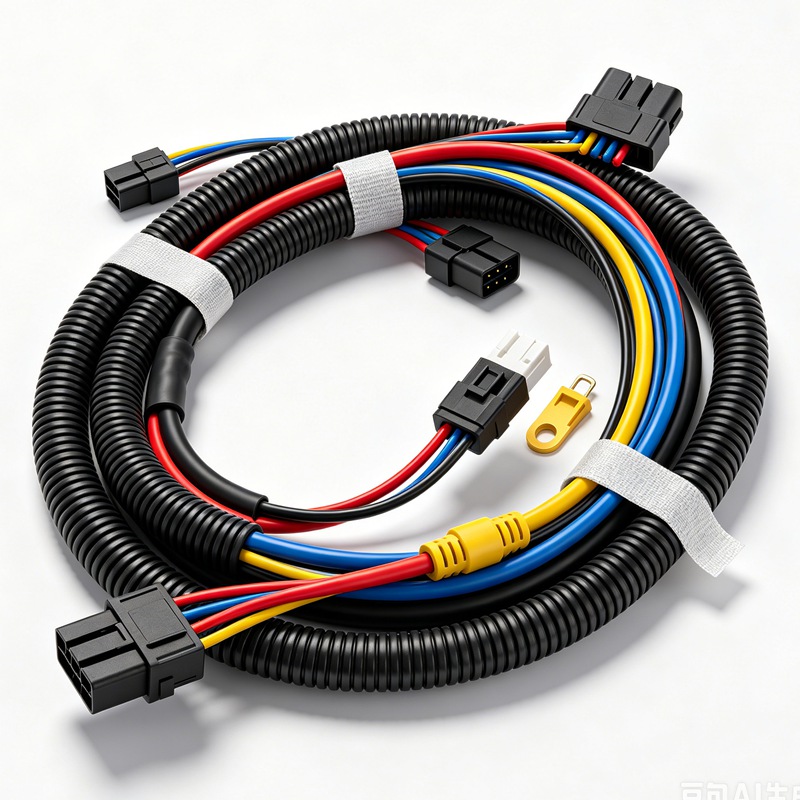
Automotive wiring harness assemblies are widely used across transportation and industrial sectors.
EV systems require high-voltage harness assemblies with enhanced insulation, shielding, and thermal resistance.
Applications include:
Harness systems support:
Heavy-duty applications require reinforced protection against vibration and environmental stress.
Typical applications include:
Automotive harnesses increasingly integrate with intelligent electronics and communication systems. Related manufacturing capabilities can also be found in our Multilayer PCB Manufacturing and Rigid PCB Board Solutions services.
A stable manufacturing process is essential for automotive-grade reliability.
Automated equipment ensures precise cutting length, stripping accuracy, and identification marking.
Crimp quality directly affects conductivity and long-term electrical stability. Production typically includes pull-force inspection and crimp cross-section verification.
Connector insertion accuracy and locking integrity are checked during assembly to reduce field failure risk.
Cable routing follows defined assembly boards to ensure consistency and installation compatibility.
Each harness can undergo:
Visual inspection verifies labeling, routing accuracy, protective sleeving, and assembly completeness before shipment.
Automotive wiring harness production requires strict process management and traceability.
TUOGEE manufacturing processes focus on:
For automotive electronic projects requiring integrated PCB manufacturing, customers also reference our Turnkey PCB Assembly Services capabilities.
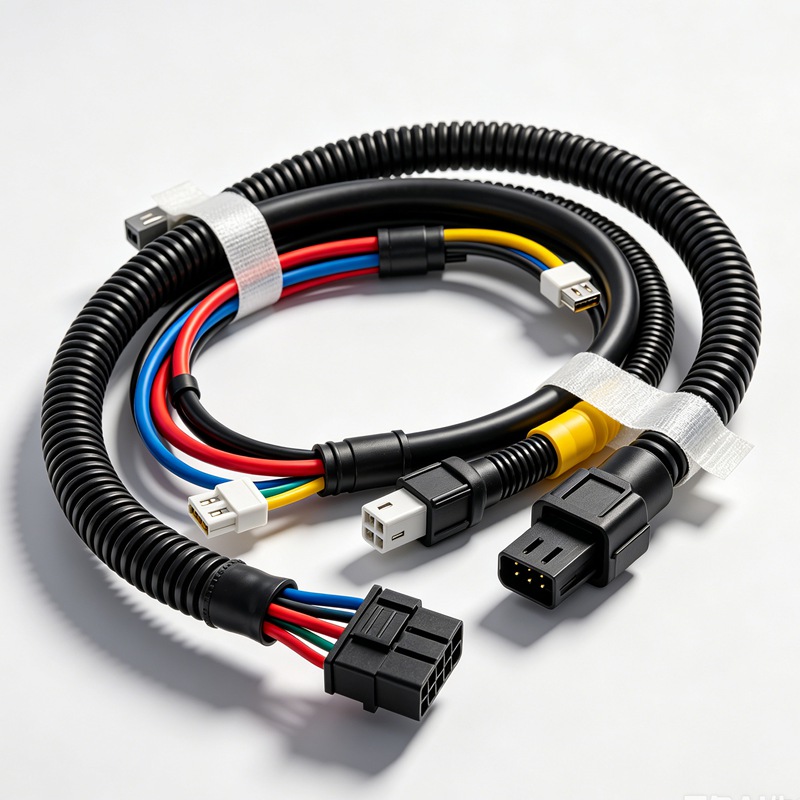
Wire gauge selection must match system current requirements to avoid overheating and voltage drop.
Modern vehicles contain dense electronic systems. Proper shielding helps reduce signal interference.
Applications exposed to water or outdoor environments often require waterproof connectors and sealed assemblies.
Repeated vibration and movement can cause fatigue failure if strain relief and routing are not properly designed.
Well-structured harness layouts simplify installation, diagnostics, and maintenance.
Automotive harness performance is heavily influenced by cable and connector materials.
Important factors include:
Material compatibility becomes especially important in EV and high-power applications.
An automotive wiring harness is an organized assembly of wires,
terminals, connectors, and protective materials used to transmit
electrical power and signals throughout a vehicle.
Automotive harnesses are widely used in passenger vehicles,
electric vehicles, industrial equipment, commercial transportation,
agricultural machinery, and intelligent mobility systems.
Yes. Harnesses are commonly customized based on connector types,
cable specifications, routing structure, voltage requirements,
shielding, and environmental conditions.
Typical tests include continuity testing, insulation resistance
testing, high-voltage testing, crimp pull-force testing, and
visual inspection.
Low-voltage harnesses mainly support signal and standard electrical
systems, while high-voltage harnesses are designed for EV batteries,
motors, and power systems requiring higher insulation and safety standards.
Yes. Waterproof harness assemblies use sealed connectors,
protective sleeves, and specialized materials for harsh outdoor
or moisture-prone environments.
Yes. Many automotive electronic systems combine wiring harnesses
with PCB assemblies, control modules, sensors, and embedded electronics.
Key factors include material quality, crimp consistency,
connector stability, routing design, and environmental protection,
and electrical testing procedures.